

Currently Empty: € 0.00
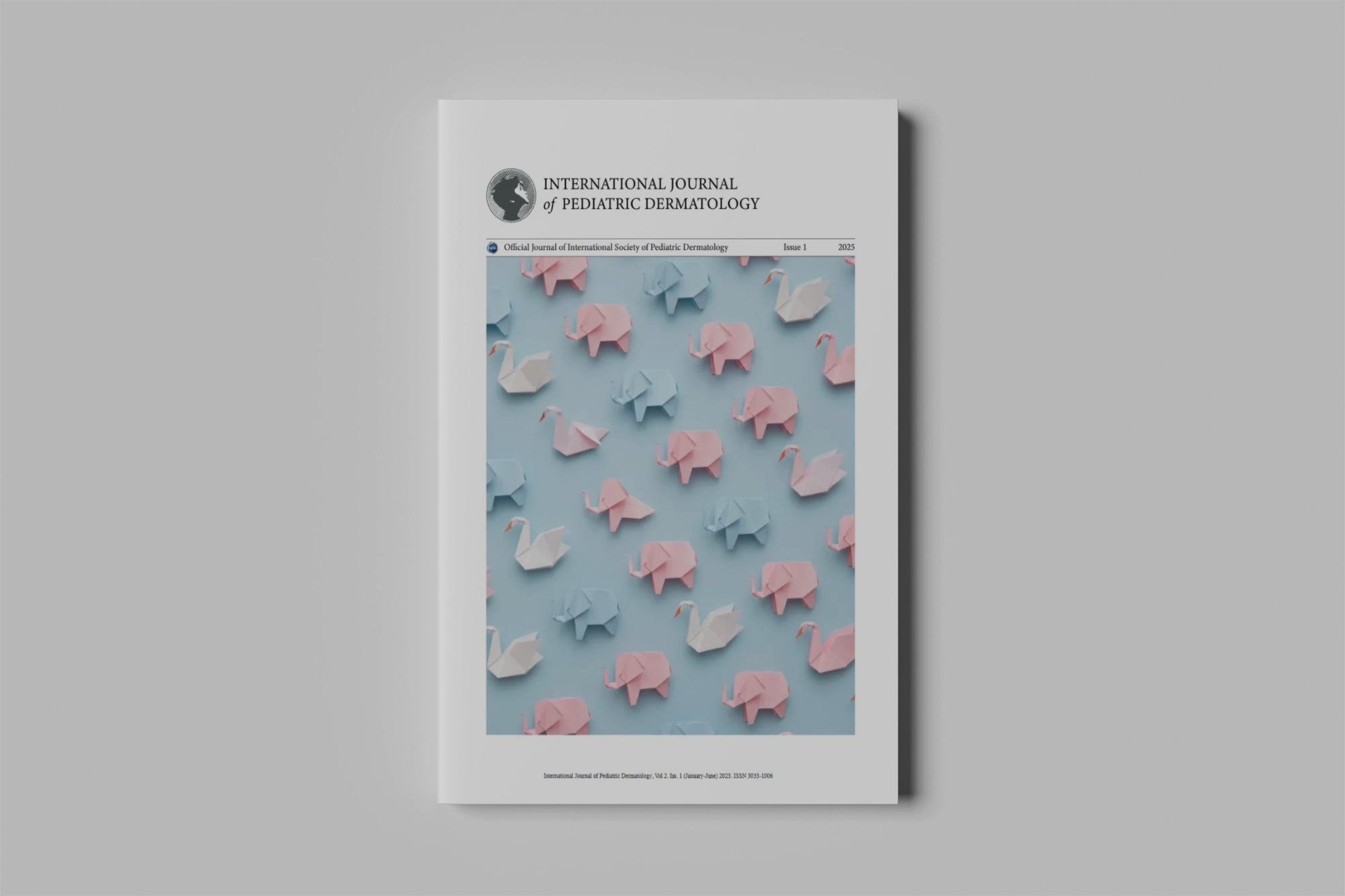
International Journal of Pediatric Dermatology, Vol. 2. Iss. 1 2025
Il prezzo originale era: € 150.00.€ 0.00Il prezzo attuale è: € 0.00.
The latest issue of the International Journal of Pediatric Dermatology opens with a Letter to the Editor addressing the Expert Panel on Pediatric Photoprotection, convened by the World Health Academy of Dermatology and Pediatrics at Guglielmo Marconi University in Rome last March. The topic of photoprotection, particularly in pediatric populations, has garnered increasing attention in recent years – not only among researchers and dermatologists but also among pediatricians and the general public – due to emerging concerns regarding the potential health risks associated with sunscreens containing organic compounds. The short and long-term consequences of inadequate sun protection, including an elevated risk of skin cancer and melanoma, have long been recognized by both the scientific community and the public. Consequently, photoprotection-based prevention campaigns have gained traction since the 1980s. More recent concerns have focused on the safety profile of sunscreens, particularly those formulated with organic filters and those utilizing nanoparticle delivery systems, which may themselves pose health risks. Recent literature has consistently demonstrated that organic sunscreen agents are systemically absorbed and detectable in the bloodstream following topical application. Furthermore, these compounds have been implicated in endocrine disruption and carcinogenesis in animal models. Although extrapolation from animal studies to human health outcomes must be approached with caution, the precautionary principle suggests that alternative photoprotective strategies should be considered. The International Expert Panel provided authoritative recommendations on lifestyle modifications and sunscreen use tailored to pediatric populations, aimed at mitigating the adverse health effects of ultraviolet exposure. In alignment with the most current scientific evidence, the Panel identified non-nanoparticle zinc oxide formulations containing less than 25% active ingredient as the safest and most effective alternative to organic sunscreens.
This issue also features a case report by Maria Isabel Pastura (Buenos Aires), describing Dowling-Degos disease and exploring the differential diagnosis of reticular pigmentary anomalies in pediatric patients. Despite overlapping clinical presentations, these conditions differ significantly in terms of age of onset, anatomical distribution, progression, systemic associations, and distinctive histopathological and molecular characteristics.
Antonio Iannone and colleagues present the case of a 4-month-old Moroccan infant with pigmentary dermatitis involving the trunk and extremities. Clinical and dermoscopic findings supported the diagnosis of Terra Firma Forme Dermatosis.
Jessica Wright and Jeffrey Rein report a case of neonatal human metapneumovirus infection accompanied by a diffuse rash and petechiae. The authors propose that the presence of the Rumpel-Leede phenomenon (pressure-induced purpura) may obviate the need for further diagnostic investigations to exclude serious conditions such as vasculitis, thrombocytopenia, or meningococcemia in the context of febrile viral illness.
Finally, Theoharis C. Theoharides, a leading authority on mast cell biology, describes five pediatric cases of cutaneous mastocytosis co-occurring with autism spectrum disorder. He hypothesizes a non random association, suggesting that mast cell activation in cutaneous mastocytosis may contribute to the pathogenesis of neurodevelopmental disorders. If validated, therapeutic strategies targeting mast cell activation could offer meaningful clinical benefits.
We hope you enjoy this issue.